
As the tech world turns its eyes to Taipei, the buzzword is unequivocally “AI”. The event’s theme, “AI Together,” proposes a cooperative ecosystem for artificial intelligence. However, behind the marketing slogans, a fierce battle is brewing between the titans of the semiconductor industry. The 2026 exhibition is more than a simple trade show; it’s a high-stakes arena where the future architecture of AI will be debated and defined.
Table of Contents
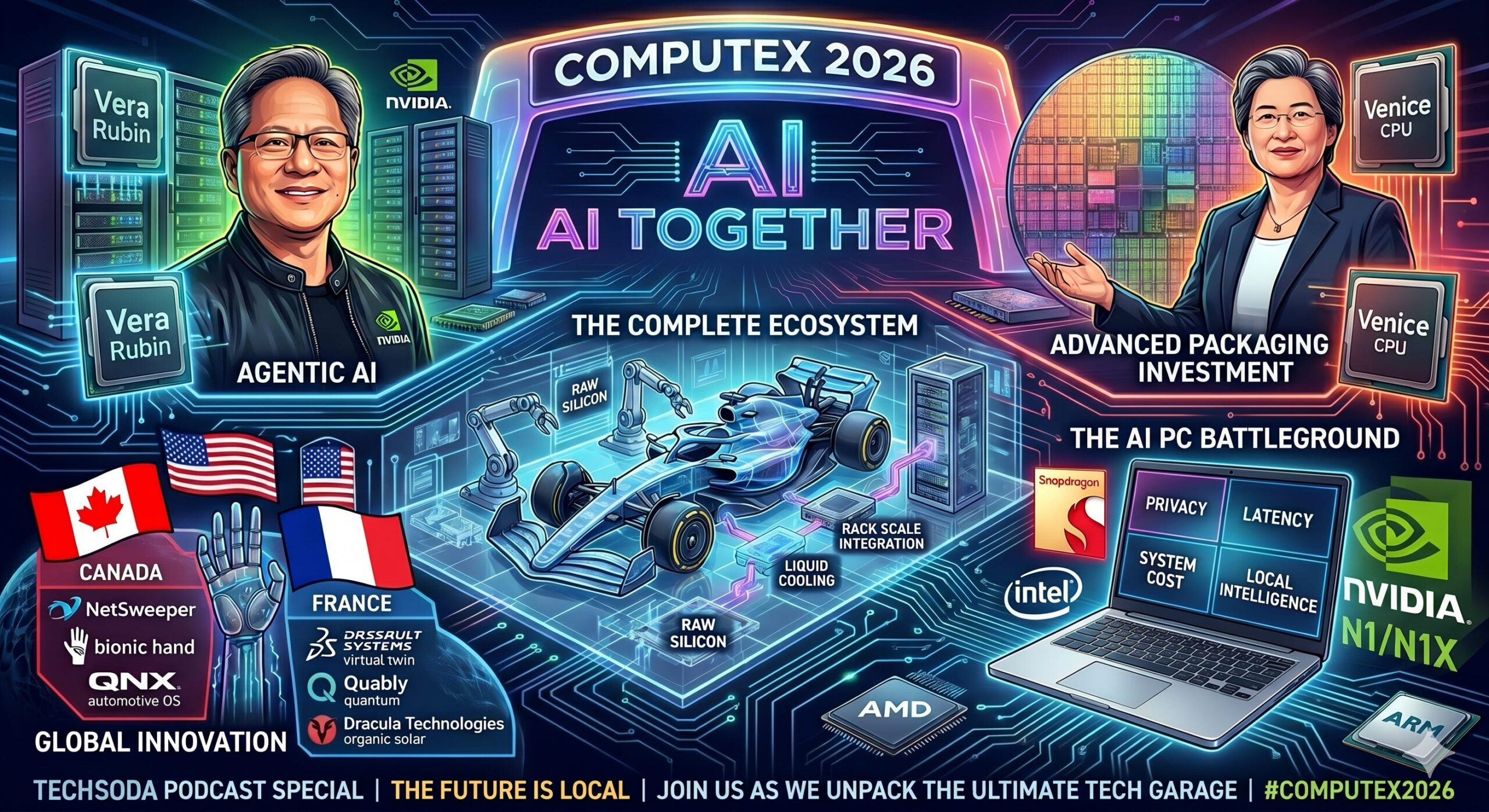
The main story for computex 2026 revolves around a seismic shift from focusing on individual chip performance to engineering complete, system-level AI solutions. While this sounds transformative, skeptical analysis is warranted. We’re expecting major announcements that will test this very premise.
The Titans of AI Hardware
Dominating the headlines for this year’s show are the three giants of silicon: Intel, AMD, and NVIDIA. Each one is preparing with a distinct strategy aimed at securing dominance in the next era of computing. Prerelease briefings confirm that the battleground has moved beyond raw teraflops and into the nuanced territory of AI-specific architecture, software ecosystems, and power efficiency. This is a decidedly more complicated war than mere chip-to-chip comparisons.
For its part, Intel previewing its “Nova Lake” desktop processors, which are rumored to feature a radically redesigned neural processing unit (NPU). The goal is to bring powerful client-side AI capabilities to the mainstream PC market. AMD’s response is anticipated to be its Ryzen AI Max 400 platform, a direct challenge to Intel’s client-side ambitions and an evolution of its existing AI-enabled processors. Yet, the player everyone is watching remains Nvidia, whose GTC conference is practically a co-located event this year, signaling its immense influence. Nvidia’s strategy for computex 2026 is less about a single product and more about reinforcing its full-stack dominance, from silicon to software.
You might also like: Nydfs ai guidance: A Critical Warning for Financial Institutions
Is the Industry Really Working Together on AI?
The official theme of computex 2026 is “AI Together,” a slogan that artfully masks the hyper-competitive reality. Although the concept of a unified ecosystem is appealing to customers, the technical and business moats being built by each company suggest the opposite. The critical question investors and developers should be asking is whether these new platforms will genuinely interoperate or simply lock users into proprietary hardware and software stacks.
Our investigation suggests a trend toward vertical integration. Nvidia’s CUDA platform is the textbook example, a powerful software ecosystem that effectively locks developers into Nvidia hardware. In response, Intel is pushing its oneAPI initiative, and AMD is championing its ROCm software stack. The keynotes at this year’s expo will probably be filled with platitudes about open standards, but the underlying business models point to a future of walled gardens. This is the central contradiction of computex 2026: a theme of togetherness in an industry defined by brutal competition.
In addition, the pivot to “system-level” AI infrastructure is not as straightforward as it sounds. It involves incredibly complex challenges in memory bandwidth, interconnects, and cooling, areas where proprietary solutions often outperform standardized ones. This provides a compelling motive to build closed systems, directly undermining the collaborative spirit touted by the event’s theme.
Navigating the Geopolitical Minefield
No discussion of the semiconductor industry at computex 2026 is complete without acknowledging the towering shadow of geopolitics and regulation. The CHIPS Act in the United States and similar initiatives in Europe and Asia have injected massive uncertainty for global supply chains. Expert commentary from leading consultancies have repeatedly warned that hardware announcements, no matter how impressive, are subject to the whims of export controls and national security policies.
This tension creates a difficult balancing act for the companies presenting at computex 2026. They must showcase groundbreaking technology while simultaneously navigating a maze of international trade rules. We are seeing evidence that companies are diversifying their manufacturing and assembly operations, but these are multi-year transitions that do not solve the immediate problem. The promises made on stage in Taipei could be delayed or even nullified by a single policy change in Washington or Beijing.
Also read: Darkiris platform Exposes a Critical Industry Flaw
Furthermore, the growing debate around AI safety and ethics is beginning to translate into potential regulations. Talks about mandatory audits of AI models and hardware traceability could impose significant new compliance burdens on the very systems being unveiled at computex 2026. The era of “move fast and break things” in AI hardware is facing its twilight.
The Bottom Line on computex 2026
To sum up, the technical wizardry on display will be impressive, computex 2026 should be viewed through a lens of critical skepticism. The shift to system-level AI is real and significant, but the “AI Together” narrative feels more like a convenient marketing fiction than a strategic reality. The core business models of the key players are predicated on building proprietary ecosystems that are fundamentally at odds with true collaboration. The real value of computex 2026 will be in discerning the gap between the polished keynotes and the underlying technical and geopolitical realities.
Critical Signals to Watch:
- Key metric: Any announcements regarding cross-platform compatibility for new AI software development kits. True interoperability will be a game-changer.
- An important signal: The specifics of power consumption and thermal performance for Intel’s Nova Lake and AMD’s Ryzen AI Max 400. Real-world efficiency often matters more than peak performance.
- Major indicator: Nvidia’s strategy for its software stack. Will they make any concessions to open standards, or will they double down on the CUDA moat?
- Monitor closely: Any mention of supply chain diversification or regional manufacturing plans in the official keynotes.
- Watch for: The projected price points for these new AI-enabled systems. Accessibility will be key to the “AI on every device” vision.
The developments at this year’s event will set the tone for the AI industry for the next 18-24 months. Cutting through the hype will be essential for anyone making strategic decisions in this space.