
In recent times, the semiconductor world has banked its future on chiplet integration. The concept was simple and elegant: break down massive, monolithic chips into smaller, Lego-like “chiplets” that could be mixed and matched to create powerful, custom processors more cheaply and efficiently. But now, in mid-2026, that utopian vision is colliding with a harsh reality. A series of industry findings, highlighted by a May 2026 report in Semiconductor Engineering, reveal that the move to the technology is encountering major headwinds.
Table of Contents
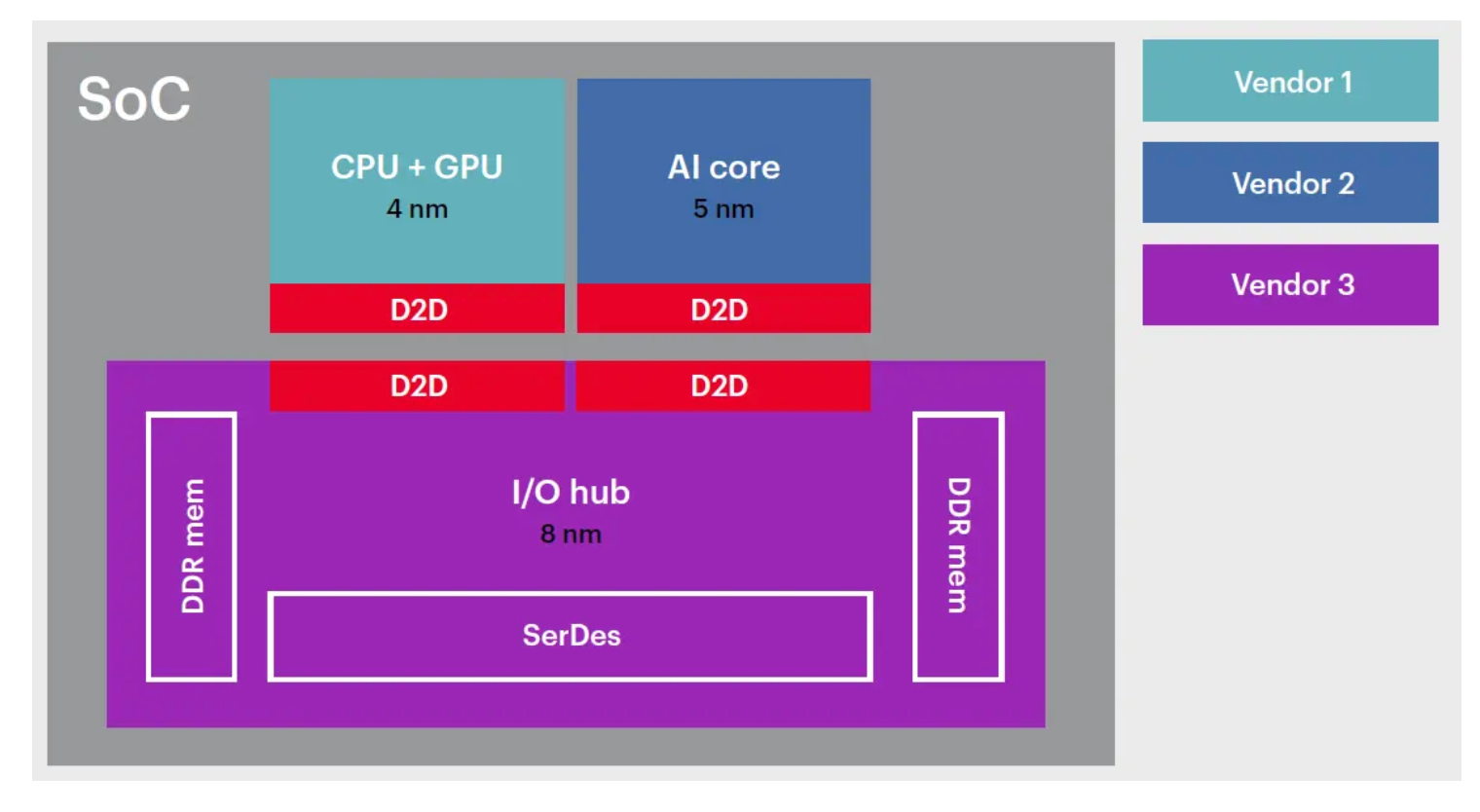
The key challenges are no longer theoretical. The industry is grappling with escalating packaging costs, confusing and sometimes conflicting interconnect standards, and major reliability questions about the very materials used to hold these complex assemblies together. This isn’t just a minor setback; it’s a systemic engineering and economic challenge that questions the foundational assumptions behind the this innovation revolution.
Who Really Controls the Chiplet Ecosystem?
To understand the current crisis, one must first map the battlefield. The domain of the system is dominated by a few powerful players, each with their own agenda. Tech giants like Intel and AMD have been the most visible proponents, using chiplet designs to push the performance of their server and desktop CPUs. AMD, in particular, found massive success by leveraging it to compete with Intel, using chiplets manufactured by TSMC.
However, the real power often lies a layer deeper, with the companies that provide the “how.” TSMC’s CoWoS (Chip on Wafer on Substrate) packaging technology is a critical enabler, creating a technical moat that is very difficult for others to cross. This creates a dependency; you can design the best chiplet in the world, but if you can’t access the advanced packaging to connect it, your design is worthless. Even with the establishment of the Universal Chiplet Interconnect Express (UCIe) standard, which aims to create an open ecosystem, proprietary solutions and “walled gardens” persist. This fragmentation is a central source of the current challenges facing the platform.
Also read: Nvidia photonics investment: Nvidia’s Critical $6.5B Gamble on AI’s Future
chiplet integration: Why the Economics Are Faltering
The primary argument for the technology was economic. By manufacturing smaller dies, companies could achieve better yields and lower costs compared to producing one enormous, monolithic chip where a single defect could ruin the entire unit. Conceptually, this is sound. But in practice, as detailed in recent industry analyses, is that second-order costs are spiraling out of control.
The evidence suggests that the economic case for this innovation is weakening, a fact substantiated by deep dives from publications like Semiconductor Engineering. The expenses associated with advanced 2.5D and 3D packaging, such as creating silicon interposers and managing thermal stress, are significant. Furthermore, the challenge of testing and validating each individual chiplet to ensure it is a “known-good-die” (KGD) before the high-stakes final assembly adds another layer of complexity and expense that many early models underestimated.
Furthermore, new reliability issues are emerging. The low-temperature solders required for some advanced packaging techniques are proving to be brittle and susceptible to failure under thermal stress, creating a long-term risk for devices that are supposed to last for years in data centers and vehicles. This combination of high upfront costs and long-term reliability risks is a perilous cocktail that is making many question the true total cost of ownership for the system systems.
The Standardization Standoff
At the heart of the problem is a fundamental contradiction. For the it ecosystem to thrive, it needs a truly open and reliable standard that allows components from different vendors to work together seamlessly. The UCIe standard was created for this exact purpose. But the same corporations pushing for this standard also have powerful incentives to lock customers into their own proprietary, high-margin solutions.
This leads to friction. While UCIe has seen updates and adoption, its progress has been slower than hoped, and many of its advanced management features are optional, allowing vendors to create subtly incompatible versions. The question of accountability, a point often raised by industry analysts, is a major hurdle. When a system with chiplets from three different companies fails, who is responsible? The designer, the foundry, the packaging house, or the interconnect standard itself?
This ambiguity is a massive business risk that chills investment and slows adoption, particularly in mission-critical sectors like automotive and aerospace where reliability is non-negotiable. Until the industry can solve the “blame game” inherent in multi-vendor the platform, the dream of a universal, plug-and-play ecosystem will remain just that—a dream.
Also read: Semiconductor device research: A Critical Warning for 2026
The Bottom Line on chiplet integration
When all is said and done, chiplet integration is not dead, but the initial euphoria has given way to a sobering period of engineering and economic reckoning. The transition from a monolithic design philosophy to a modular one is proving to be substantially more difficult than the early hype suggested. The promise of Lego-like simplicity has been replaced by the reality of multi-physics complexity, fractured standards, and daunting reliability hurdles. For investors, engineers, and tech strategists, ignoring these warning signs would be a costly mistake.
Critical Signals to Watch:
* Monitor: The adoption rate and, more importantly, the enforcement of mandatory compliance within the UCIe 2.0+ specifications.
* Track: Public statements from TSMC, Intel, and Samsung regarding “known-good-die” (KGD) yields and advanced packaging costs.
* Pay attention to: The first major product failure or recall publicly attributed to multi-vendor chiplet integration reliability issues.
* Look for: Any slowdown in hyperscaler investment in chiplet-based architectures, as noted in forecasts from firms like Gartner.
* Evaluate: The launch of any new high-performance proprietary interconnects by major players, which would signal a retreat from the open ecosystem ideal.
The success of chiplet integration is not guaranteed. It requires a level of industry-wide collaboration on standards, testing, and reliability that has so far been elusive. The coming 18-24 months will be critical in determining whether these challenges can be overcome, or if the industry will be forced to seek a different path beyond Moore’s Law.